

Hey there! As a worm gear supplier, I've seen firsthand the crucial role that lubrication methods play in the performance and longevity of worm gears. In this blog post, I'm gonna dive deep into the effects of different lubrication methods on worm gears, sharing some insights that I hope will be useful for you.
Understanding Worm Gears
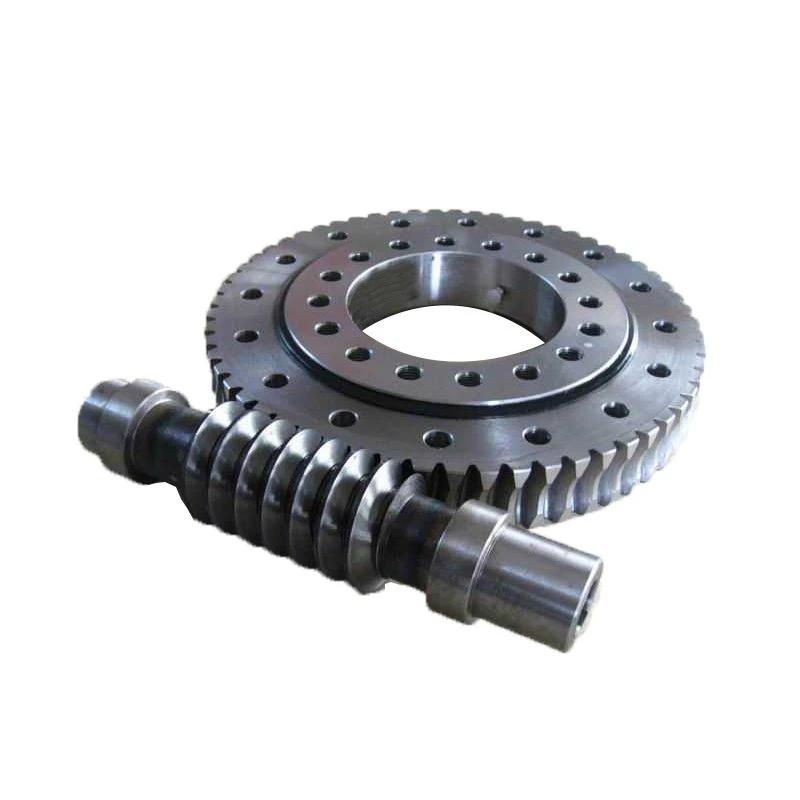
Before we get into the lubrication stuff, let's quickly go over what worm gears are. A worm gear consists of a worm (which looks like a screw) and a worm wheel. The worm meshes with the worm wheel, and when the worm rotates, it drives the worm wheel, allowing for a high reduction ratio and smooth, quiet operation. Worm gears are used in a wide range of applications, from conveyor systems to automotive steering mechanisms.
We offer a variety of worm gear products, including Steel Worm Gear, Worm Gear Shaft, and Worm Gear Sets. Each of these products has its own unique requirements when it comes to lubrication.
The Role of Lubrication in Worm Gears
Lubrication is not something to be taken lightly when it comes to worm gears. It serves several important functions. Firstly, it reduces friction between the worm and the worm wheel. As the worm and the wheel mesh together, there's a lot of sliding contact, which can generate a significant amount of heat and wear if not properly lubricated. By reducing friction, lubrication helps to minimize wear and tear on the gear surfaces, extending the lifespan of the worm gear.

Secondly, lubrication helps to dissipate heat. The heat generated during the operation of a worm gear can cause thermal expansion, which may lead to misalignment and other issues. A good lubricant acts as a coolant, carrying away the heat and keeping the temperature of the gear system within acceptable limits.
Another important function of lubrication is to prevent corrosion. The metal surfaces of worm gears are exposed to the environment, and they can rust or corrode over time. Lubricants form a protective film on the gear surfaces, shielding them from moisture and other corrosive elements.
Different Lubrication Methods
Oil Lubrication
Oil lubrication is one of the most common methods used for worm gears. There are a few ways to apply oil. One way is through splash lubrication. In this method, the lower part of the worm gear is submerged in an oil sump. As the worm gear rotates, it splashes the oil onto the gear teeth, providing lubrication. This is a simple and cost - effective method, but it may not be suitable for high - speed or high - load applications, as the oil may not be able to reach all the critical areas quickly enough.
Another way of oil lubrication is through forced - feed lubrication. In forced - feed lubrication, an oil pump is used to deliver oil to the gear teeth under pressure. This ensures that a continuous supply of oil is available at all times, even in high - speed or high - load situations. Forced - feed lubrication is more effective in reducing friction and heat, but it is also more complex and expensive to set up.
The type of oil used also matters. For worm gears, synthetic oils are often preferred over mineral oils. Synthetic oils have better thermal stability, which means they can withstand higher temperatures without breaking down. They also have lower coefficients of friction, providing better lubrication and reducing wear.
Grease Lubrication
Grease lubrication is another option for worm gears, especially in applications where oil leakage is a concern or where a simple lubrication system is required. Grease is a semi - solid lubricant that consists of a base oil and a thickening agent. When grease is applied to a worm gear, it adheres to the gear surfaces, providing a continuous film of lubrication.
Grease lubrication is easy to apply and can provide long - lasting lubrication. However, it has some limitations. Grease has a higher resistance to flow compared to oil, which means it may not be able to reach all the small gaps and recesses in the gear system as effectively as oil. Also, heat dissipation is not as efficient with grease as it is with oil, so grease lubrication is typically not suitable for high - speed or high - heat applications.
Effects of Lubrication Methods on Worm Gear Performance
Efficiency
The lubrication method can have a significant impact on the efficiency of a worm gear. A well - lubricated worm gear will operate more efficiently, as the reduced friction means less energy is wasted in overcoming the resistance between the worm and the worm wheel.
Oil lubrication, especially forced - feed lubrication, generally provides better efficiency compared to grease lubrication. The lower viscosity of oil allows it to flow more easily between the gear teeth, reducing the amount of power losses due to friction. In high - efficiency applications, such as electric vehicle drivetrains, the choice of lubrication method can make a big difference in the overall energy consumption.
Wear and Tear
Proper lubrication is essential for reducing wear and tear on worm gears. When the gear surfaces are not properly lubricated, they can experience abrasive wear, adhesive wear, and even pitting. These forms of wear can lead to a decrease in the gear's performance and eventually cause it to fail.
Oil lubrication is better at reducing wear compared to grease lubrication in most cases. The continuous supply of oil in forced - feed lubrication ensures that the gear surfaces are always protected by a thin film of lubricant, preventing direct metal - to - metal contact. Grease, on the other hand, may not be able to replenish the lubricant film as quickly, especially in high - load or high - speed situations, leading to increased wear.
Noise and Vibration
Lubrication also affects the noise and vibration levels of a worm gear. A poorly lubricated worm gear can produce a lot of noise and vibration, which can be a nuisance in some applications.
Oil lubrication helps to dampen the vibrations and reduce the noise generated by the worm gear. The oil acts as a cushion between the gear teeth, absorbing the shocks and vibrations that occur during operation. Grease lubrication can also reduce noise and vibration to some extent, but it may not be as effective as oil lubrication, especially in applications where there are high - frequency vibrations.
Factors to Consider When Choosing a Lubrication Method
When choosing a lubrication method for a worm gear, there are several factors to consider. The first is the operating conditions of the worm gear. If the worm gear is operating at high speeds, high loads, or high temperatures, oil lubrication, especially forced - feed lubrication, may be the better choice. On the other hand, if the worm gear is operating in a low - speed, low - load environment and oil leakage is a concern, grease lubrication may be sufficient.
The type of application also matters. For example, in food processing applications, the lubricant must be food - grade to ensure the safety of the products. In some industrial applications, where the gearbox is difficult to access for maintenance, a long - lasting lubrication method, such as grease lubrication, may be preferred.
Conclusion
In conclusion, the lubrication method has a profound effect on the performance, efficiency, and longevity of a worm gear. As a worm gear supplier, we understand the importance of choosing the right lubrication method for each application. Whether you need Steel Worm Gear, Worm Gear Shaft, or Worm Gear Sets, we can provide you with the necessary information and support to ensure that your worm gears are properly lubricated.
If you're in the market for worm gears or have any questions about lubrication methods, don't hesitate to reach out. We're here to help you make the best choices for your applications. Let's start a discussion and see how we can work together to meet your needs.
References
- "Gear Handbook" by Darle W. Dudley
- "Mechanical Design Engineering Handbook" by Mykhaylo Yevtushenko


