


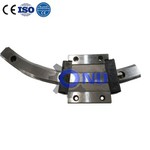
Pulley
What is Pulley
A pulley is a wheel on an axle or shaft that is designed to support movement and change of direction of a taut cable or belt, or transfer of power between the shaft and the cable or belt. In case of a pulley supported by a frame or shell that does not transfer power to a shaft, but is used to guide the cable or exert a force, the supporting shell is called a block, and the pulley may be called a sheave or pulley wheel.
Advantages of Pulley
Mechanical Advantage: Pulleys allow for mechanical advantage, which means that they make it easier to lift heavy loads than using pure physical strength alone. The more pulleys used, the easier it is to lift heavy loads.
Efficiency: Pulleys are highly efficient machines because they reduce the amount of effort required to lift or move heavy objects. This is because they change the direction of force required, allowing for easier work.
Versatility: Pulleys can be used in a wide variety of settings, from simple machines to complex systems. They are used in everything from cranes to elevators, and from boats to construction equipment.
Safety: Using pulleys can increase safety, especially when working with heavy loads. Instead of having people lift and move heavy objects, they can use pulleys to do the work instead.
Cost-effective: Pulleys are relatively cheap and easy to produce, which makes them easy to acquire and use. They require very little maintenance and are able to provide many years of use.


Custom Solutions: We understand that each application has unique requirements, and our team can work with you to develop custom sprockets tailored to your specific needs. Whether you're looking for a reliable custom sprockets Manufacturer to meet your unique demands, we have the expertise and experience to deliver the high quality solutions you require.
Quality Assurance: We take pride in providing sprockets of the highest quality, precision, and performance. Our products undergo stringent testing to ensure they meet or exceed industry standards.
Technical Support: Our experienced team is ready to assist you with product selection, installation guidance, and any technical inquiries you may have.
Application Areas: Sprockets are widely used in various industries, including conveyor systems, packaging machinery, agricultural equipment, and more.
Uses of Pulleys
There are many uses for a pulley, but we have listed some of the uses of the pulley below:
They are used for shipping goods.
They are also used for marine transportation systems.
They are also used for moving industrial equipment.
They are used for heavy machinery transportation as well.
They are used in elevators.
They are also used at airports for transferring goods to aeroplanes.
They are also used in many vehicles like bikes, bicycles, etc.
Cranes, bulldozers, etc. also use them.
How to Choose Pulley

Before Selecting a Pulley
Once you are selecting the pulley system you need for your operation, you should focus on the numbers. Each pulley system has its own rules and caveats to follow to ensure you choose a pulley that is sized properly for the cable you are using. Pulleys are sized based on the working load of the cable. For example, if you are working with 100 pounds, you need to select a cable with a working load of at least 10 times greater than the weight you need to lift, which would be 1,000 pounds. It is a balancing act between the cable material, the load, the maximum load on the cable, the pulley material, and the pulley diameter.
What to consider when choosing a pulley assembly?
When choosing a pulley system, it's essential that you choose the right materials and component sizes to handle the task at hand. Before selecting, it's useful to ask yourself the following questions:
What size working load(s) need lifting?
What pulley construction do I need to use?
What diameter pulley is right for my job?
· How many cycles are necessary over the pulley's lifetime?


What can go wrong with a pulley system?
An efficient, high-quality pulley system is one that incorporates the right materials, implements the right design considerations, and ultimately stands the test of time. If your product doesn't incorporate a well-designed pulley system, you may be in for significant problems including complete cable or pulley failure.
One of the biggest problems is metal on metal grinding. Using steel cabling without any kind of heat resistant coating, such as nylon, can result in metal that warps from continuous friction, grinding itself together into a fused mess.
You also have to be wary of too much load against a fixed surface. If you anchor the cabling against a sharp enough angle when installing the pulley, the cable acts as a saw against that surface, easily cutting through anything in its path.
Using a cable or pulley wheel that is the incorrect size or material is the root of all other potential issues. It is important to select the right pulley array to satisfy both the load you intend to lift and the number of cycles that you need the pulley system to be able to perform over the course of its life.
Partner With The Right People
We offer a wide range of solutions for any job including both standard and bracket type pulleys in varying bore types, and a complete selection of minimum and maximum cable widths.
As a final step, select the right material to ensure that your pulley system stands up to whatever you throw at it. Offers:
Nylon
Plated steel
Delrin
Molybdenum disulfide nylon

Applications of Pulley

Uses of pulley to lift water from the well
The oldest uses of the pulley system is lifting water from the well. It uses the moveable pulley to draw the water from the well. The rope is tied with a bucket at one end, and another end is in the hand of the user, who pulls the water. The rope and the bucket are thrown into the well, and when the bucket is full of water, the user exerts a force on the other end of the rope. The pulley axel helps the user reduce the applied force to pull the bucket filled with water. Hence makes the complete drawing of water from the well easier.
Elevator
One of the best uses of pulleys in the engineering domain is an elevator. To lift the heavyweight, high tensile ropes are used. The elevator carries heavyweights that can move up and down quickly by the pulleys. The elevator consists of several motor systems that lift the object with the mechanism of the pulley system—in the absence of a pulley, lifting the object and moving becomes a bit complicated.
Lifting cargos
In order to transfer the objects from one floor to another floor of multi-story buildings, the lifting cargos are very helpful. It is difficult to lift the massive object manually is very difficult. The uses of a pulley equipped in lifting cargos completes the task quickly.
The window curtains move smoothly up and down due to the simple pulley mechanism. A cord is attached to the wheel of the pulley, and when the cord is pulled, the curtain rises up. It is the very simplest form of use of pulley in everyday life.
Fans with chains use the pulley system for their operation. The fan is fitted with two chains or cables hanging at the bottom of the fan. If you pull one chain, it makes the fan turn on, and the other one makes the fan turn off when it is pulled.
In the construction of tall building or to lift the heavy object to greater height or to lift the vehicles the cranes are widely used. The cranes use a pulley mechanism to lift the thing. It consists of raising rope, chains, and sheaves. When the force is applied to these cables and chains, the crane lifts the object. Modern cranes are designed in such a way that they can lift complex materials beyond human capacity.
The most conventional uses of pulley is the extended ladders that you can see everywhere. The painters and the carpenters widely use this ladder. The rung lock system of the ladders uses the pulley mechanism. The lower end of the rung lock is fitted with the cord. This cord is extended to the top of the ladder by crossing over the pulley. The ladder can extend to a certain height by these pulley systems. Since the cord is extensible, we can easily adjust the height of the ladder accordingly.
Certain gym and exercise tools make uses of pulleys in their mechanism. This equipment uses moveable pulleys for their operation. The one end of the string in the equipment is attached to the weights, and another end is given to the user through a pulley. When the user pulls the string, the string exerts the tension force, which is transferred to the body. It helps in strengthening the muscle. Not only gym equipment but some athletic training tools are also involved in the use of pulley systems.
In construction sites
Uses of pulley mechanism is very common in the construction. Since the pulleys are made to lift the massive object, pulleys are widely used in construction sites. The pulleys help to lift and dumping of the materials used for the construction. Most commonly, block and tackle pulleys are used in construction sites. The gun tackle and yard and stay tackle pulleys are widely used.
Flag poles
Another widespread uses of a pulley is a flag pole. We can not hoist the flag without a pulley. Since the flag pole is tall, a rope is tied to the flag pole along with the pulley. To unfold the flag at the top of the pole, pulleys play a vital role. When the rope is pulled, the flag moves upwards with the pulley’s help, and when the rope is dragged, the flag opens. Hoisting the flag becomes effortless because of the use of pulleys in the process.
Rock climbing
The effective uses of the pulley system is rock climbing. It isn’t easy to climb the rock because the climber has to move against gravity. It needs to exert greater force to climb the rocks. Pulleys help to do this task with ease. The climbers have attached themselves to the climbing cord, which passes over the pulley. When the climber pulls the cord downwards, the climber moves upwards with the help of the pulley. This reduces to exerting more force to climb.

The uses of pulleys are extended in the birdfeeders also. These birdfeeders are fitted with pulleys to keep the feeders at the top of the trees or poles.
It can be pulled down when it needs to be refilled. This significantly helps to feed the birds in the high trees.
The fishing rods are used to catch the fishes is fitted with the pulley at the axel of the rod. The pulleys help to move the cable fitted with the hook to elongate as the axel rotates. This is the simplest form of pulley system. The modern fishing rods are formed by the gear system also.
A simple pulley is used in the sailboats to lift the heavy sails and the cargos. Sailboat may use multiple pulleys for the lifting process. It consists of both fixed and moveable pulleys. One of the sailboats is fitted with a simple pulley and rope. When the rope is pulled downward direction, the other end of the boat is lifted. The use of pulleys also helps to ensure smooth sailing. It is because the bearing system uses the pulley mechanism in sailing boats and ships.
The moveable steps or escalators you have seen in the shopping mall, railway station, and airports are make uses of pulley system and the gear system for their motion. The escalator’s handrail moves with the steps of the escalator when the passenger puts their hand on the handrail. At the back of the escalators, the pulleys are attached with the gears to move the escalator and the handrail to move together.
These pulleys provide tension to the escalator’s belt to rotate and move in the direction opposite to the applied force.

Garage doors or shutter
Garage doors are bulky to lift. It is a complex lift manually. The uses of a pulley system helps to move the shutter up and down. At the top of the doors, four pulleys are fitted connected to the weightless string. These pulleys help to make the process easier. When the shutter door pulls up, the exerted force applied to the pulley makes the string rotate, and the door moves up and down easily.
Theatre system
A simple curtain can be pulled manually, but raising the theatre curtain manually is highly impossible. In order to raise the curtain, several sets of pulleys are required, which are attached to the single cord. The uses of pulley helps to move the curtain upward when the cable is pulled down.
Timing belts in Automobiles
Certain parts of automobiles make uses of pulley systems for their better performance. A type of pulley called idler pulleys is widely used in vehicles. These pulleys are employed to provide tension to the drive belt. These pulleys operated against the belt direction so that the tension on the belt get reduced.
Oil derricks
In oil and petroleum industries, the uses of pulley systems can be found regularly. Usually, the pulleys are mounted at the top of the rig, or it can be seen in the running wire lines. To gain mechanical energy, the pulleys are arranged in blocks and tackle between the crown blocks and the traveling blocks. The block and tackle pulley provide sufficient mechanical energy to lift the heavy load. For the wireline operation, two pulleys are hung in the derrick, and the wireline runs smoothly.
Material of The Pulley
The material of the pulley can vary depending on its application and requirements. Common materials used are
Steel
For heavy-duty applications that require high strength and durability.
01
Aluminum
For lightweight applications that require corrosion resistance and ease of movability.
02
Plastic
For low-load applications that require low friction and quiet operation.
03
Ceramic
For high-temperature and corrosive environments.
04
Nylon
For reducing noise and vibration in certain applications.
05
Tips to Maintain Pulley
Keep Pulleys Clean
Ensure that there is no debris or dust on the pulleys. Regular cleaning with a damp cloth or brush can prevent the pulleys from clogging.
Lubricate Regularly
It is important to lubricate the pulleys regularly to reduce friction and prevent damage. Use a high-quality lubricant recommended by the manufacturer.
Check for Wear and Tear
Inspect the pulleys for signs of wear and tear, such as grooves, cracks, or chips. If you notice any damage, replace the pulleys as soon as possible.
Use Appropriate Pulleys
Use the appropriate pulleys for the application. Ensure that the pulleys are rated to handle the weight and load of the system.
Proper Alignment
Ensure that the pulleys are correctly aligned. Misaligned pulleys can cause unnecessary wear and tear, reduce efficiency and cause premature damage.
Regular Inspections
Regularly inspect the pulleys to ensure they are in good condition. Replace any components that show signs of wear or are damaged during inspection.
Proper Tension
Ensure that the pulleys are correctly tensioned. Too much or too little tension can cause unnecessary wear and damage.
Proper Storage
Store the pulleys properly when not in use. Ensure that they are kept in a dry and clean location, with proper protection from dust and debris.
Our Factory
Our factory is established in 2000 and at 2010 we founded foreign trading company-Tianjin Ounaida Transmissions Machinery Trading Co., Ltd.Our factory has advanced and precise equipment to efficiently complete the production of products.


FAQ
Q: What is a pulley?
Q: What are the 3 types of pulleys?
Q: What was the pulley originally used for?
Q: What is one example of pulley?
Q: What are Advantages of pulleys?
Q: What is the most basic pulley?
Q: How does a simple pulley work?
Q: What's the difference between a pulley and a sheave?
Q: Do pulleys reduce force?
Q: What is a modern example of a pulley?
Q: How do pulleys make it easier to lift?
Q: Why are 2 pulleys better than one?
Q: Is a shiv and a pulley the same thing?
Q: Is a pulley like a wheel and axle?
Q: Can you pull yourself up with a pulley?
Q: Do we still use pulleys?
Q: Does a roller coaster have a pulley?
Q: What is a pulley for kids?
Q: What is a 3 1 pulley?
Q: Do movable pulleys increase force?