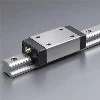
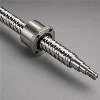
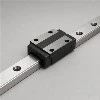
From Component Stacking to Integrated Modules: How Linear Modules Boost Assembly Efficiency by 40%
I. Industry Status: Design Cycles Burdened by "Component Stacking"
In traditional automated equipment R&D, engineers often endure tedious selection and assembly processes: selecting linear guides, matching ball screws, designing complex motor mounting seats, and finally, repeatedly debugging the parallelism between components on-site.
This traditional "loose-part assembly" model is revealing significant drawbacks in today's era of rapid delivery:
Low Space Utilization: The physical volume of multiple combined parts is often too large to meet the needs of lightweight and compact equipment.
Cumulative Assembly Errors: If the parallelism between the guide and screw relies on manual adjustment, it easily generates installation stress, significantly shortening the equipment's service life.
High R&D Costs: Engineers spend excessive energy on basic structural design and calibration rather than core process innovation.
II. Technical Trends: The Shift Toward Integrated Actuators
Through extensive communication with high-end manufacturing clients, TJOND has observed that integrated actuators (modules) are becoming the preferred choice in fields such as semiconductor inspection, medical devices, and laboratory automation.
The core advantages of this integration technology include:
Monolithic Base Structure: The guide tracks are processed directly onto a U-shaped base. This structure not only reduces cross-sectional dimensions but also ensures absolute geometric accuracy through integrated machining.
Balance of Rigidity and Lightweighting: Bases optimized via Finite Element Analysis (FEA) provide higher torsional rigidity than traditional aluminum profile combinations while reducing weight.
"Plug-and-Play" Ready: By reducing the use of fasteners by over 60%, the potential for vibration during equipment operation is fundamentally minimized.
KDI Linear Module Technical Highlights: More Than Just an "Assembly"