What is a sprocket?
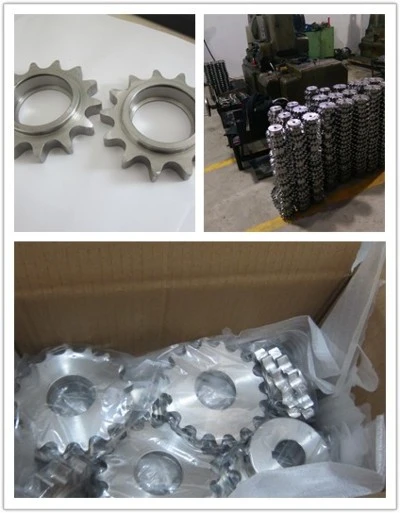
A sprocket is a wheel with cog-type sprockets designed to engage precisely pitched blocks on a chain link or cable. Sprockets are widely used in chemical, textile machinery, escalators, wood processing, three-dimensional parking garages, agricultural machinery, food processing, instrumentation, petroleum and other industries for mechanical transmission.
The tooth shape of the sprocket must ensure that the chain energy can enter and exit meshing smoothly and freely, minimize the impact and contact stress of the chain link during meshing, and be easy to process. The sprocket requires sufficient strength and wear resistance, so the material of the sprocket should ensure that the teeth have sufficient strength and wear resistance. For this reason, the tooth surface of the sprocket is generally heat-treated to make it reach a certain hardness.
The material of the sprocket generally includes No. 45 steel, brass, plastic, nylon, stainless steel 304, stainless steel 316, 20Cr, 42CrMu, 20CrMnTi, etc.
The service life of the sprocket is short, which is far from meeting the requirements of production practice. According to the use of the sprocket, processing status, and manufacturing technology, the sprocket needs to be improved:
(1) The design material of the original sprocket is 40Cr, the overall quenching and tempering hardness is HB220~250, and the teeth are quenched HRC48~52. This method basically cannot improve the wear resistance of the sprocket wheel because of the limited quenching hardness of the teeth. It is suggested to change the sprocket material to 20CrMnTi, carburized and quenched, the hardness of the chain nest can reach above HRC60, and its wear resistance is more than 2.5 times that of 40Cr material. This can greatly increase the service life of the sprocket, reduce the frequency of repairs, increase productivity and reduce production costs;
(2) The shape of the original sprocket chain socket is directly formed by forging, which has a large dimensional error and rough surface, which also reduces wear resistance. With the wide application of CNC machine tools and the reduction of processing costs, it is recommended to leave a small margin after forging, and finish machining by digital milling to improve dimensional accuracy and surface roughness, so as to achieve the purpose of improving wear resistance.