Quenching and tempering refers to a heat treatment process used to improve the comprehensive mechanical properties of steel materials. That is, after quenching, it is tempered at high temperature.
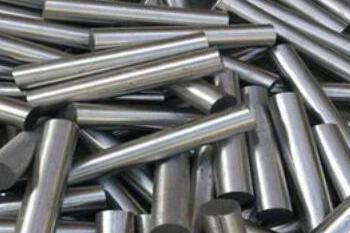
The purpose of quenching and tempering is to make steel parts obtain a good combination of strength and toughness, which not only has high strength, but also has excellent toughness, plasticity, and cutting performance. Some alloy steels or low alloy steels must be quenched and tempered to obtain good comprehensive properties, and these steels can also be called quenched and tempered steels. Quenched and tempered ductile iron can not only increase the strength, but also improve the hardness and wear resistance.
Quenching and tempering treatment refers to the double heat treatment method of quenching and high temperature tempering, the purpose of which is to make the workpiece have good comprehensive mechanical properties. High temperature tempering refers to tempering between 500-650°C. Most quenched and tempered parts work under relatively large dynamic loads. They bear the effects of stretching, compression, bending, torsion or shearing. Some surfaces also have friction, requiring certain wear resistance and so on.
In short, the parts work under various compound stresses. These parts are mainly structural parts of various machines and mechanisms, such as shafts, connecting rods, studs, gears, etc., which are widely used in manufacturing industries such as machine tools, automobiles, and tractors. Especially for large components in heavy machine building, quenching and tempering treatment is used more. Therefore, quenching and tempering treatment occupies a very important position in heat treatment.
The quenched and tempered parts in mechanical products have different performance requirements due to their different stress conditions. Generally speaking, all kinds of quenched and tempered parts should have excellent comprehensive mechanical properties, that is, a proper combination of high strength and high toughness, so as to ensure the long-term smooth operation of the parts.